During the pandemic, Nations acted swiftly to keep COVID-19 out of the communities. Different Nations-based responses appeared throughout the pandemic; Nations promptly declared states of emergency, closed their borders, maintained essential services, and adopted creative approaches to keep people safe.


Berens River, Sandy Bay, and Bloodvein all declared states of emergencies between March 18-20, 2020, communicating changes in services, protocols, and how to stay safe to their residents.
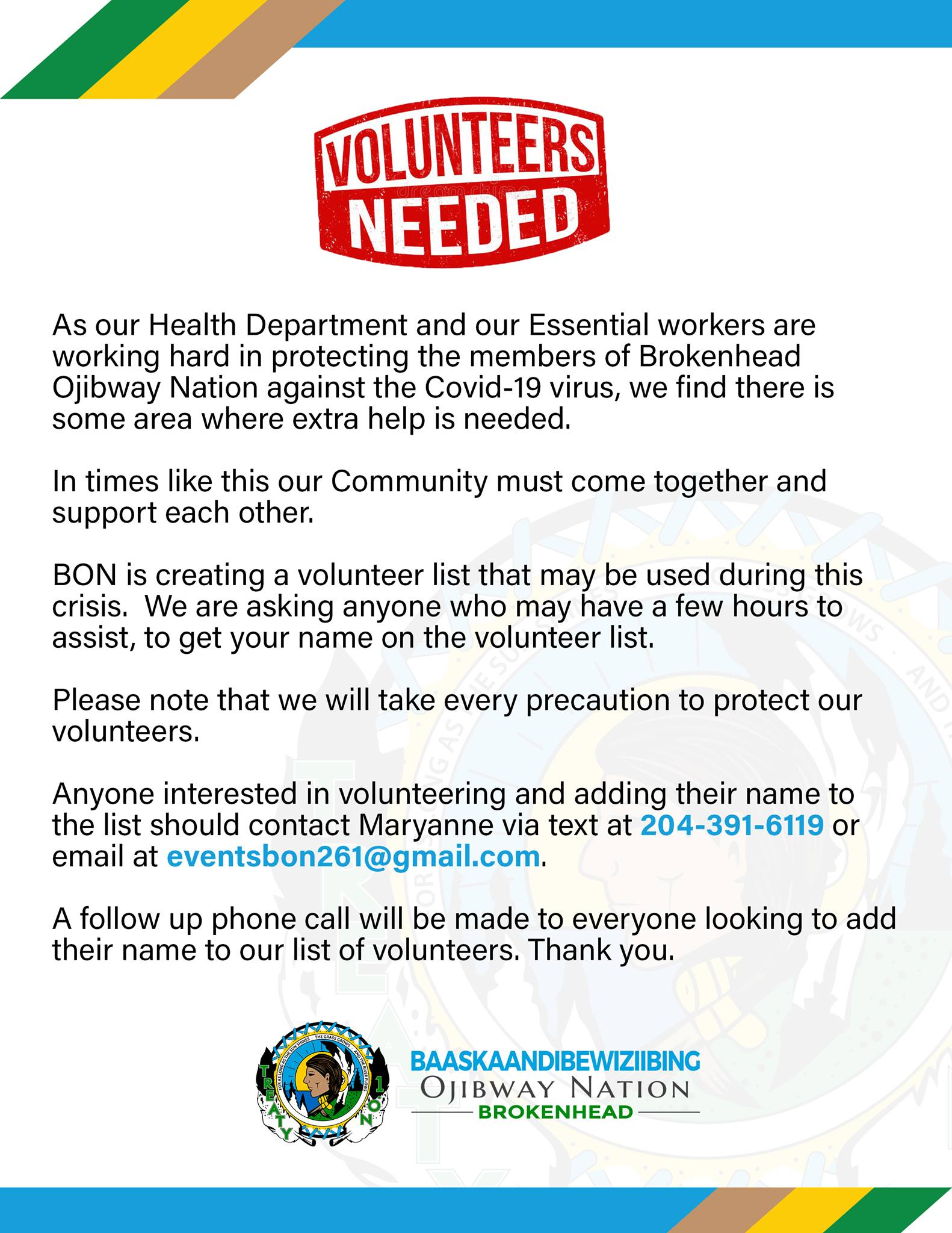
Nations called upon people to support communities. Community champions played key roles to ensure people’s needs were met while isolating. Additional bodies were needed to help with grocery deliveries, distributing supplies, and checking on people.
Community-led check points occurred in many Nations. Fisher River, Peguis First, and Kinonjeoshtegon First Nation implemented community member led check points to screen non-community members travelling in and out of their jurisdiction. Check points allowed for thorough screening of individuals traveling to communities for work related purposes as means to prevent COVID-19 outbreaks and to ensure safety of First Nations community members. Doubly, check points ensured that community members were exiting and entering community for essential purposes only. Check points would eventually focus on stopping non-residents from entering community.


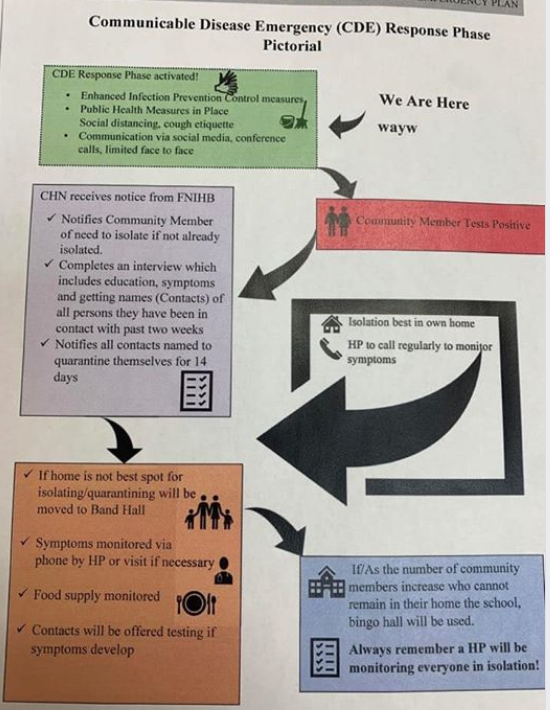
Waywayseecappo developed a Communicable Disease Emergency Response Phase to share with community members to better understand why public health protocols are in place and what happens when someone tests positive for COVID-19.
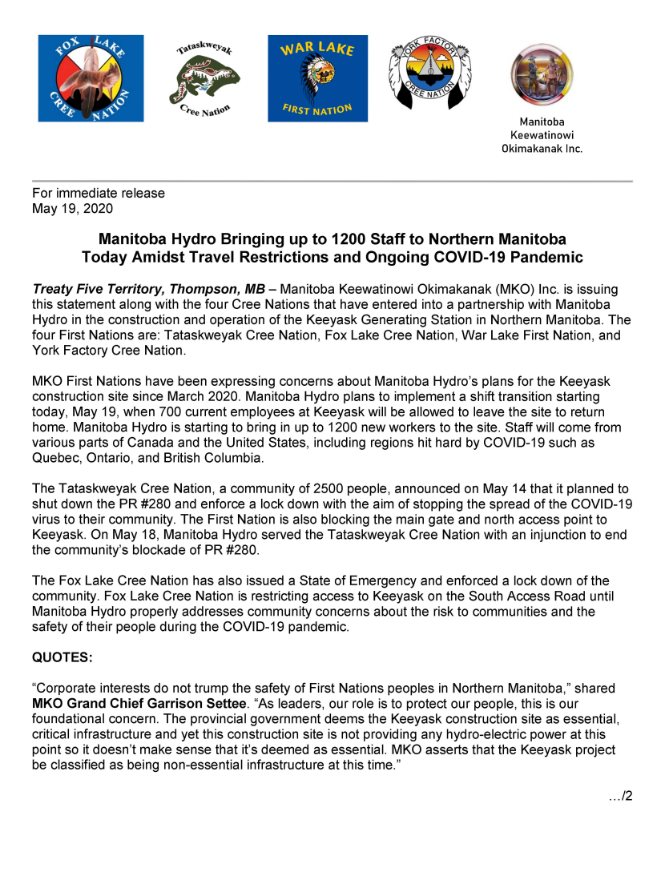
This media release highlights the tensions between provincial energy sectors, public health restrictions and Northern First Nations communities. The four Cree nations: Tataskweyak Cree Nation, Fox Lake Cree Nation, War Lake First Nation, and York Factory Cree Nation united to stand against the contradictory and often high-risk decisions of Manitoba Hydro and the province to continue construction of a hydroelectric close to neighbouring First Nations communities. When concerns were not being respected and acted, the four communities responded by blocking the main gate and access to the construction site.


Long Plain First Nation’s emergency preparedness plan included an emergency hostel located at the Long Plain school where people experiencing houselessness could self-isolate. Community planning often included responses to ensure that all members were cared for.
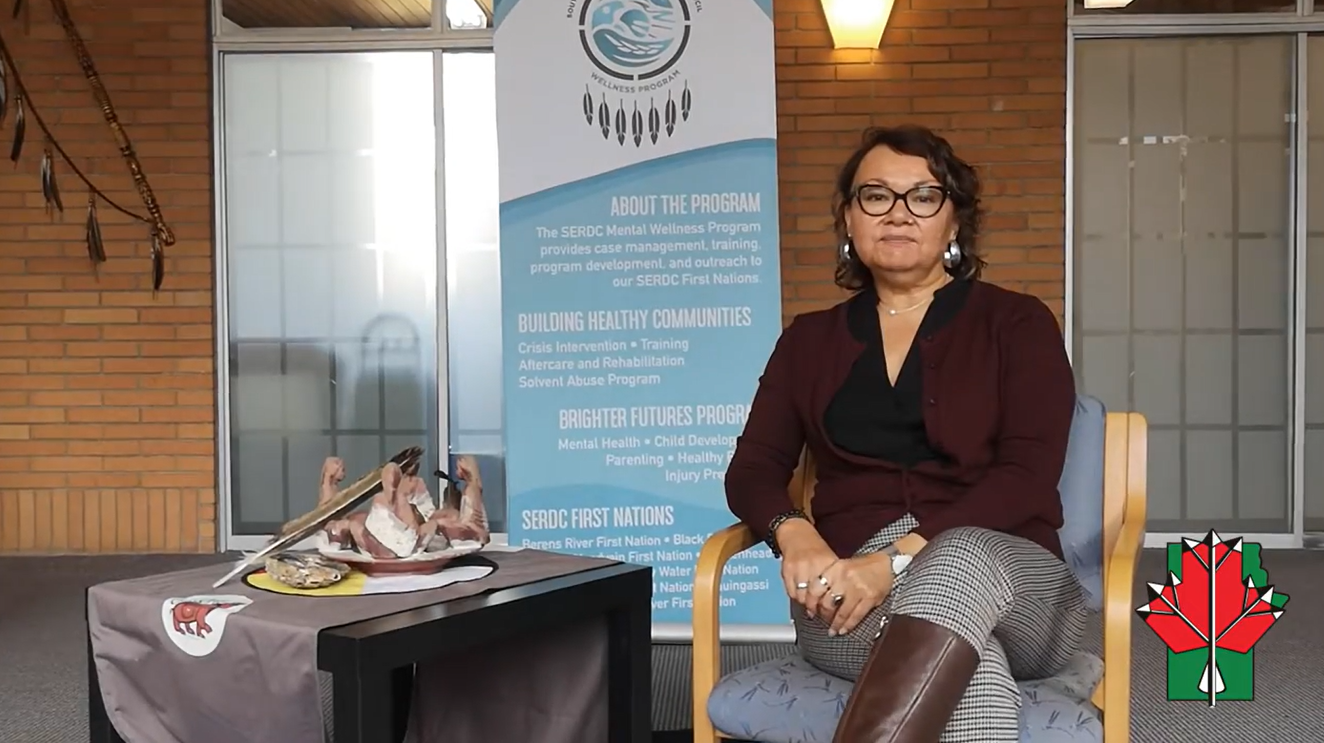
SERDC wellness team discusses the way they have supported SERDC member Nations during COVID-19 including vaccine confidence, providing cultural supports in Nations, alternative isolation accommodations, wellness checks for those isolating in hotels, on-site physiotherapy and other wraparound services.

Colour coded status alerts allowed households to communicate their COVID-19 status (infected, isolating, no infections) and any basic needs to neighbourhood watch members. The intent was that community helpers would see the alerts and be able to arrange for appropriate essentials to be dropped off to households without them having to break isolation/quarantine. Initiatives such as these demonstrates how community care was enacted during COVID-19.
